
Black Friday and Cyber Monday (BFCM) kick off the biggest shopping weekend of the year, right after Thanksgiving. For personal trainers, fitness coaches, and online coaches, it’s the one week when people are already in a buying mood and already thinking about getting back on track before January.
The best Black Friday strategy for coaches is to lead with a high-value offer, such as a bonus bundle, a prepaid package, or a payment plan, instead of a steep discount. Unlike a product, personal training takes your time to deliver, so every percent you take off your rate means you need more clients just to earn the same profit.
In this guide, we’ll help you turn Black Friday into the start of a strong year for your coaching business, not a one-week spike.
- 7 Black Friday strategies for new clients, current clients, and past clients
- A day-by-day marketing timeline for BFCM week
- A setup checklist so your sale runs in the background
- A plan to retain new clients through the holidays and into the new year
Should coaches run a Black Friday sale at all?
Yes, as long as you have open spots and a clear plan for what happens after people pay. Black Friday works well for coaches because it catches people right before the January rush, when they’re motivated to start but haven’t committed to anyone yet. It works badly when it’s a last-minute discount with nothing behind it.
Run a Black Friday offer if:
- You have room on your roster and can take on new clients without dropping the quality of your coaching.
- You have a proven program or package that you know gets results.
- You have an audience that already knows you, whether that’s an email list, social following, past clients, or a waitlist.
Keep it small, or skip it, if:
- You’re already fully booked and couldn’t onboard 5 more clients in January.
- Your offer is brand new and hasn’t been tested with real clients yet.
- Deep discounts would clash with how you’ve positioned your coaching all year.
Premium or fully booked? You may not need a discount at all. If your roster is full or your brand is built on premium pricing, a discount can do more harm than good. Use BFCM to open a waitlist for January, offer early renewals to current clients, or add a bonus instead of cutting your price.
7 Black Friday strategies for personal training
The best Black Friday strategy depends on who you’re selling to. New clients need a low-risk reason to try you. Current clients need a reason to commit longer or spend more. Past clients need a friendly reason to come back. You don’t need all seven, so pick the two or three that match your biggest goal this year.
| Strategy | Best for | Main goal |
|---|---|---|
| 1. Limited-time discount promotion | New clients | Turn fence-sitters into paying clients |
| 2. Value-add bundle | New clients | Sell more without lowering your price |
| 3. Low-cost intro offer with an upsell | New clients and cold audiences | Get people in the door, then upgrade them |
| 4. Referral promotion and gift cards | New clients, through current ones | Reach friends and family of your clients |
| 5. Upsell to prepaid packages | Current monthly clients | Increase revenue and lock in commitment |
| 6. Early-access renewals and loyalty upgrades | Current clients | Reward loyalty and secure next year early |
| 7. Win-back campaign | Past clients and old leads | Bring back people who already trust you |
Need a quick read? Watch the Everfit Academy webinar on prepping your online coaching offer for Black Friday
1. For new clients: Run a limited-time discount promotion
Best for: New clients who’ve been following you for a while but haven’t committed yet.
What it is: A Black Friday discount that’s sized to your margins and your capacity, not to whatever other coaches are posting. Most coaches pick a number that feels exciting, like 40% or 50% off, without checking how many extra clients they’d need just to break even. A smart discount is usually smaller than you’d think, has a clear end date, and is limited to the number of spots you actually have.
How it works:
Before picking a number, you need to know your profit margin: the share of each client payment you keep after all costs, including your own time at the hourly rate you want to earn.
Step 1: Work out your cost per client and your floor price. Make sure the cost includes the software and payment fees, marketing budget, and cost of your time. Your floor price is your total cost per client. If you charge less than that, you lose money on every new client you sign.
Step 2: Check how many more sales the discount needs. Every discount means you need more clients to earn the same profit. Here’s the formula: Extra sales needed = discount ÷ (profit margin − discount)
What this means for your discount:
- 1:1 coaching with $400/month (around a 35% margin): Keep any straight discount at 10% or less, or skip it and use a value-add bundle (which is strategy 2). At 20% off, you’d need more than twice your usual sales just to earn the same profit.
- Online or hybrid coaching with $200/month that runs on defined programs (around a 70% margin): A 15% to 30% discount on a prepaid package can work, because each client costs you much less to serve.
- Either way: Tie the discount to something worth it to you, like upfront payment or a longer commitment, not just a lower monthly rate.
Use a fixed dollar amount for first-month deals. If your offer is a discounted first month, “$50 off your first month” works better than “50% off.” A half-price first month makes the second month feel like a price hike, which is exactly when people cancel.
Coaching platform like Everfit can help you set up your discount code with ease. Here’s a few tips:
- Name: Keep it short and easy to type, like BFCOACH.
- Dates: Set a start and end date that match your promo window, so the code expires on its own.
- Usage limit: Cap it at the number of spots you really have. If you can take 10 new clients, the code works 10 times.
- Plan limit: Restrict it to the plans you want to sell, such as 6-month plans only.
- One per client: Stop people from stacking it or using it twice.
Don’t do this:
- Don’t race to the bottom. A deeper discount brings in more price shoppers, and price shoppers are the first to cancel.
- Don’t inflate your “was” price. Raising your price in October so you can “cut” it in November is the kind of thing the FTC’s Guides Against Deceptive Pricing warn against, and clients notice. Your “was” price should be what you actually charged.
- Don’t run discounts all year. If you’re always on sale, people learn to wait.
- Don’t extend the deadline. If your sale “ends Sunday” and is still running on Tuesday, nobody will believe your next deadline.

2. For new clients: Create a value-add bundle
Best for: New clients, especially if you’re close to full or don’t want to discount your coaching.
What it is: You keep your regular price and bundle in extras that make the offer worth more, like a holiday meal plan, a travel workout pack, or a bonus check-in call. Clients feel like they got a deal, and your rate stays exactly where it was. It’s also a smart choice if your price is already as low as it should go, or if you don’t want to train your audience to wait for discounts.
Here’s what that looks like in an offer:
“Join my 12-week coaching program by Cyber Monday and get three on-demand bonuses: my Holiday Meal Plan ($49 value), a Travel Workout Pack for hotel rooms and home gyms ($39 value), and a 1:1 New Year free session ($75 value). That’s $163 in extras, included free.”
The best bonuses do double duty. They make the offer more attractive today, and they keep new clients engaged during December, which is when most people fall off.
Do this:
- Pick bonuses that fit the season, such as holiday nutrition guides, 20-minute workouts for busy days, Thanksgiving healthy recipe books, or a goal-setting call for January. Low-effort bonuses you build once and give to everyone, like templates, workbooks, recipe guides, or a monthly group Q&A, protect your time better than extra 1:1 calls.
- Use bonuses you’ve already built or can reuse every year, so they don’t add hours of work.
- Spell out the total value in one line so people can see the deal right away.
Don’t do this:
- Don’t add bonuses that create lots of one-on-one work for you, like unlimited extra calls, when you’re about to onboard a wave of new clients.
- Don’t pile on so many extras that the offer gets confusing. Three is plenty.
3. For new clients: Open a low-cost intro offer with an upsell path
Best for: New clients and cold audiences who aren’t ready to commit to full coaching yet.
What it is: A small, affordable first step, such as a 21-day holiday challenge, a 4-week kickstart program, or a discounted first month, that leads into your full coaching. It’s a great fit if your audience is newer or more price-sensitive, and it gives you a second offer for people who said no to your main one. The key is that it isn’t the end of the sale. It’s the start of a path that ends with an upsell.
How it works: Here’s a simple version you can copy:
- Sell a “21-Day Holiday Reset” for $39 during BFCM week, starting the following Monday.
- Keep the program simple: short workouts, a few daily habits, and a group chat or online check-in for accountability.
- On day 18, send participants an upsell: “Keep your momentum going. Join 1:1 coaching by January 2 and your $39 comes off your first month.”
- Follow up personally with the most engaged participants. They’ve already shown up for three weeks, which makes them your warmest leads.
This also works as a down-sell. After your main Black Friday offer closes, send the intro offer to people who clicked but didn’t buy. A “not right now” to a 6-month plan is often a “yes” to a $39 challenge.
Do this:
- Keep the programming easy to follow. The goal is quick wins and a habit of showing up, not a hard program.
- Track who’s logging workouts and engaging, so you know who to reach out to first.
Don’t do this:
- Don’t run a challenge with no next step. If it just ends, the momentum you built ends with it.
- Don’t price your intro offer so low that your regular rate feels like a shock. The jump from $39 to $200 a month needs a bridge, like crediting their challenge fee or offering a first-month discount.
4. For new & existing clients: Launch a referral promotion and gift cards
Best for: New clients, reached through the friends and family of your current clients.
What it is: BFCM kicks off the holiday gifting season, so it’s a natural time to let your clients bring in friends or buy coaching as a gift. Referred clients tend to be some of the best clients you’ll get, because they come in already trusting you. This strategy costs very little and reaches people your ads and posts never would.
There are two easy ways to run it.
- “Give one, get one” referral promotion: A current client refers a friend. The friend gets a discount on their first month, and the client gets a reward too, like a free week, a bonus session, or a progress assessment. Both sides win, so clients feel good about sharing.
- Gift cards: Sell gift cards for a short program, such as a “4-Week New Year Kickstart” for $99, that can be redeemed in January. People are already shopping for gifts, and a health gift feels meaningful, not random. Gift cards also give you a built-in January sales moment. When someone redeems their 4 weeks, you have a natural chance to offer them ongoing coaching.
Do this:
- Give clients a ready-to-post caption or graphic, so sharing takes 10 seconds.
- Make sure the reward is worth it for both the client and the friend.
- Set clear terms for gift cards, including when and how they can be redeemed.
Don’t do this:
- Don’t make referrals complicated with forms, codes, and fine print.
- Don’t sell gift cards without a simple way to activate them. A confusing redemption process turns a great gift into a bad first impression.

5. For existing clients: Upsell monthly clients to prepaid packages
Best for: Current monthly clients, plus new clients who are ready to commit.
What it is: Instead of discounting your monthly rate, you offer a longer package paid upfront, such as 3, 6, or 12 months of coaching at your best price of the year. Your monthly clients are the easiest people to upsell, because they already know your coaching works for them. You get cash in the bank before the slow holiday weeks, and clients stay committed through the point where most people drop off.
How it works: Say you charge $200 a month and your average client stays about 4 months. You offer 6 months paid in full at 15% off, which is $1,020 upfront instead of $1,200. Your revenue per coaching month drops from $200 to $170, so this isn’t free money. What you get for that $30 a month is:
- Better cash flow: $1,020 lands in December, instead of payments spread over the spring.
- Stronger commitment: Clients stay through months 2 and 3, when most people drop off.
- Lower churn risk: A client who would have left after 4 months, paying $800, now pays $1,020.
Keep in mind that the clients most likely to prepay are often your most committed ones, who might have stayed 6 months at full price anyway. For them, the discount costs you $180. That’s why this offer works best when it’s aimed at newer monthly clients and people still on the fence, and why the discount should stay modest.
Add a payment plan for people who can’t pay upfront. Not everyone can spend $1,020 in December. Splitting the package into 2 or 3 monthly payments, such as 3 payments of $340, lets more people say yes. Keeping pay-in-full as the best deal also nudges people toward paying upfront.
Do this:
- Pitch it to current monthly clients first, then open the same package to new clients.
- Put your cancellation and refund terms in writing before you sell, so there are no surprises later.
Don’t do this:
- Don’t permanently lower your monthly rate. Discount the commitment, and keep your regular price where it is.
- Don’t sell a 6- or 12-month package without a plan for months 2 and 3. That’s when motivation dips, and a client who paid upfront but stopped showing up is a refund request waiting to happen.
6. For existing clients: Offer early-access renewals and loyalty upgrades
Best for: Current clients you want to keep for next year.
What it is: An exclusive Black Friday offer just for the people who already pay you, sent a few days before the public sale opens. Your current clients are the easiest sales you’ll make all week, and they’re also the people most likely to feel left out if a newcomer gets a better deal. Taking care of them first protects your retention and gives your sale an early boost.
How it works: Two or three days before your public launch, message each current client personally. Give them one of these:
- Early renewal: Lock in next year’s coaching at the Black Friday rate, even if their current plan hasn’t ended.
- A service upgrade: Move from online-only to hybrid coaching, or add nutrition coaching to their training plan at the sale price.
- A loyalty bonus: Something new clients don’t get, like an extra progress review or a free month added to their renewal.
Do this:
- Reach out personally, not just with a mass email.
- Give current clients something new clients can’t get.
Don’t do this:
- Don’t let your loyal clients find out about your sale from an Instagram Story.
- Don’t give new clients a better deal than people who’ve been paying full price all year. If a long-time client finds out a newcomer pays less, you might win one new client and lose the trust of several loyal ones.
7. Run a win-back campaign for past clients and old leads
Best for: Past clients who stopped training with you, and leads who showed interest but never signed up.
What it is: A short, friendly comeback offer for people who already know your coaching style and trust you. That trust makes them some of the cheapest clients to win, since you don’t have to convince them you’re good at what you do. BFCM gives you a natural, low-pressure reason to reach out again.
Do this:
- Make it personal. Mention their past goals, wins, or what they were working on.
- Set a short, clear deadline so the message doesn’t sit in their inbox forever.
- Ask what got in the way last time, so you can fix it this time.
Don’t do this:
- Don’t guilt-trip people with lines like “Where did you go?” or “I haven’t seen you in months.”
- Don’t send past clients the exact same promo you send to strangers. They’ll feel like a number on a list.
How to combine Black Friday offers without confusing buyers
Running a discount, a bundle, a referral promotion, and loyalty perks all at once can backfire. Discount codes stack in ways you didn’t plan, and buyers get stuck comparing options instead of buying. A few simple rules keep things clean:
- One headline offer per audience. Each group should see one clear offer with one outcome, one deadline, and one next step. If you can’t explain it in one sentence, simplify it.
- Don’t stack discounts. Decide upfront whether a referral discount or loyalty perk can combine with your Black Friday price. In most cases the answer should be no, so clients get whichever deal is better, not both.
- Keep private offers private. Loyalty perks and win-back offers go out by personal message or a segmented email, not in your public posts.
- Layer with bonuses, not more discounts. If you want to sweeten an offer, add a bonus instead of a second price cut.
When should you start Black Friday marketing?
Start warming up your audience about a week before Black Friday, and run your sale as a window of several days instead of a single day.
| Date | Phase | What to post | What to send |
|---|---|---|---|
| Nov 20 | Warm-up | Client results and a “something’s coming” teaser | Email 1: tease the offer and invite people to join a waitlist |
| Nov 23 | Current clients first | Nothing public yet | Personal messages to current clients with their early offer |
| Nov 24 | Launch | Offer announcement post, plus a countdown sticker in Stories | Email 2: the full offer, sent to your waitlist first |
| Nov 26 | Thanksgiving | A genuine thank-you post with no hard sell | No email, give people the day off |
| Nov 27 | Black Friday push | A Reel that spotlights your bonuses or a client story | Email 3: focus on the bonuses and who the offer is for |
| Nov 29 to 30 | Final 48 hours | “Spots left” Stories and an FAQ post | Emails 4 and 5: last call, with the exact deadline |
| Dec 1 to Dec 3 | Down-sell | A post for your entry offer or challenge | Email 6: the smaller offer for people who didn’t buy |
What to post during Black Friday week
Your posts should do more than say “30% off.” People decide whether they care on social media, so use that space to show the result and the person behind the offer.
- Client results: Before-and-afters, short client quotes, or a progress story, always with the client’s permission.
- “Who this is for” post: Spell out exactly who the offer helps, such as “busy parents who want to start January already in a routine.”
- FAQ Reel: Answer the three questions you get most, like “Is this for beginners?” or “What if I travel over the holidays?”
- Comment-to-get-the-link posts: Ask people to comment a keyword like “READY,” then send the link by DM automatically. Many people won’t leave Instagram to hunt for a link in your bio.
Check your results halfway through
On Black Friday, look at your clicks and sales so far, and adjust based on what you see.
- Few people are clicking: That’s a reach problem. Post more Stories and send the offer to your full email list.
- People click but don’t buy: That’s an offer problem. Spotlight a bonus, answer common objections, and make the deadline clearer.
- Only one group is buying: That’s a message problem. Rewrite your angle for the groups that aren’t responding.
Be ready to reply in the first 24 hours. Launch day, and the day your current clients get early access, bring the most replies, DMs, and questions. Block time on your calendar to answer quickly, because a question left unanswered for two days is often a lost sale.
Run your Black Friday sale on autopilot with Everfit
The smartest thing you can do before launch is set up payments, onboarding, and first-week check-ins so they run on their own. Black Friday week is already packed with posts, emails, DMs, and your regular clients. If every new sign-up means a manual welcome message, a hand-built program, and a reminder to check in, 15 new clients can easily turn into 15 extra hours of admin in the week you have the least time.
With Everfit Automation, the busywork runs in the background, every new client gets a smooth, personal first week, and you get to spend your time on the coaching that actually keeps them.
Here is what you automated Black Friday sale season looks like on Everfit.
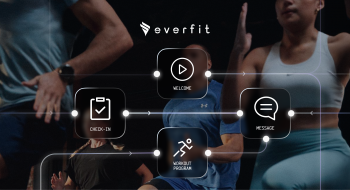
- Payment: They buy through a payment link tied to the right package and discount code.
- Welcome message: They instantly get a message that thanks them, explains what happens next, and tells them when to expect their program.
- Intake form: They fill out a short questionnaire about goals, injuries, schedule, and equipment.
- Program assigned: A ready-made program template is assigned based on their goal, which you can tweak in a few minutes instead of building from scratch.
- Day 3 check-in: An automated message asks how their first workouts went and whether anything feels off.
- Week 1 win: A short message celebrates their first completed week, which helps turn a fresh start into a habit.
Tip: Build 3 to 4 program templates for your most common goals, such as fat loss, general strength, and busy-schedule training. With templates ready, onboarding 20 new clients means adjusting 20 programs, not writing 20 programs.
How to retain Black Friday clients past January
The first 30 days and the December slump decide whether your Black Friday clients stay. A client who gets a quick win in week one, stays active through the holidays, and starts January with a fresh goal is far more likely to renew than one who gets a program and a welcome email and then hears nothing. Here’s how to carry new clients through each stage.
The first 30 days: build the habit before the results
New clients don’t need a perfect program in month one. They need to feel like they’re doing it right and that you’re paying attention.
- Aim for easy early wins. Set targets they can hit in the first week, like 3 completed workouts or hitting a daily step goal, so they feel progress right away.
- Focus on habits, not just intensity. A client who builds the habit of training three times a week will get results. A client who burns out on a hard program in week two won’t.
- Check in personally in week one. Even with automated messages in place, a short personal note or voice message makes them feel seen.
December: plan for the holiday slump
December is when brand-new clients are most likely to drift. Travel, family plans, parties, and end-of-year stress all get in the way, making it the quietest workout month of the year. Plan for it instead of hoping it won’t happen.
- Shorten the workouts. Swap in 20- to 30-minute sessions that clients can actually finish on busy days.
- Make it travel-friendly. Give clients hotel-room or bodyweight workouts they can do anywhere.
- Give them a reason to show up. A mini holiday challenge, a step goal leaderboard, or a group check-in keeps clients engaged when their routine falls apart.
- Set realistic nutrition goals. Help clients enjoy the holidays without giving up. “Protein at every meal” is a lot easier to stick to than a strict diet during party season.
January: give them a fresh start
January is your second chance to retain Black Friday clients. They’re motivated again, and they’re looking at their goals for the year.
- Start a new program phase. A new block with a clear goal, like “8-week strength phase,” makes the year feel like a fresh start, not more of the same.
- Run a progress review. Show clients how far they’ve come since November, even if the holidays were bumpy. Seeing progress is one of the strongest reasons to stay.
- Set their next milestone. Give them a goal for the next 90 days so they always have something to work toward.
How to measure your Black Friday results
The only way to know which strategy worked is to track a few numbers during the sale and for 90 days after it. Write down your numbers from a normal month before you launch, so you have something to compare against.
| Metric | What it tells you | How to calculate it |
|---|---|---|
| Conversion rate | How well your offer and message landed | Sales ÷ people who clicked your link or visited your sales page |
| New clients vs. capacity | Whether you filled the spots you opened | New clients ÷ spots you planned to fill |
| Revenue vs. a normal month | Whether the sale actually paid off | BFCM revenue ÷ your average monthly revenue |
| Revenue per coaching month | Whether your discount went too deep | Package price ÷ months of coaching included |
| Results by audience group | Which group responded best | Sales from new, current, and past clients, tracked separately |
| Refund and cancellation rate at 30 days | Whether buyers were a good fit | Black Friday clients who canceled or asked for a refund ÷ total Black Friday clients |
| Client retention at 90 days | Whether Black Friday brought you long-term clients | Black Friday clients still active after 90 days ÷ total Black Friday clients |
Also note which email, post, and bonus brought in the most sales. Over a couple of years, these numbers become your own Black Friday playbook, so you’re never starting from scratch.
If you only track one number, make it client retention at 90 days. A sale that brings in 20 clients who are all gone by March earns you less than one that brings in 10 who stay all year.
Wrapping up
Black Friday can be the biggest sales week of the year for your personal training business, but only if the clients you sign up are still with you in February. Pick two or three strategies from this guide, do the math before you choose a discount, set up your onboarding so it runs on its own, and plan your December and January before the sale even opens.
FAQ about Black Friday for coaches
Is Black Friday or New Year better for getting fitness clients?
Both work, but Black Friday gives you a head start. You catch people while they’re planning their New Year goals, before they’ve picked a coach, and they start January already in a routine. Many coaches use Black Friday to fill spots and January to sell entry offers and challenges.
How long should a Black Friday coaching sale last?
About 5 to 7 days works well for most coaches, such as from the Tuesday before Thanksgiving through Cyber Monday. That’s long enough to reach people who are busy or traveling, and short enough to keep real urgency. Add a short down-sell window afterward for people who didn’t buy.
Can new coaches with a small audience still run a Black Friday offer?
Yes. Keep it small and personal: offer a limited number of spots, message past leads and people in your network directly, and lead with a low-cost entry offer like a holiday challenge. A personal DM to 30 warm contacts often beats a big public launch.