
As a personal trainer or health coach, you spend hours refining programs, adjusting nutrition targets, and improving accountability systems.
But there’s a foundational variable that quietly influences all of it, and it’s often under-addressed:
Sleep.
Sleep is not just a recovery tool. It is a biological regulator that affects adaptation, mood, hormone balance, cognitive function, and behavioral consistency. When sleep is compromised, even the most well-designed coaching programs can underperform.
For coaches who care about client results, retention, and long-term transformation, understanding the importance of sleep is no longer optional, it’s essential.
The Science of Sleep (At a Practical Level)
Sleep is an active, highly organized biological process, not simply “time off.”
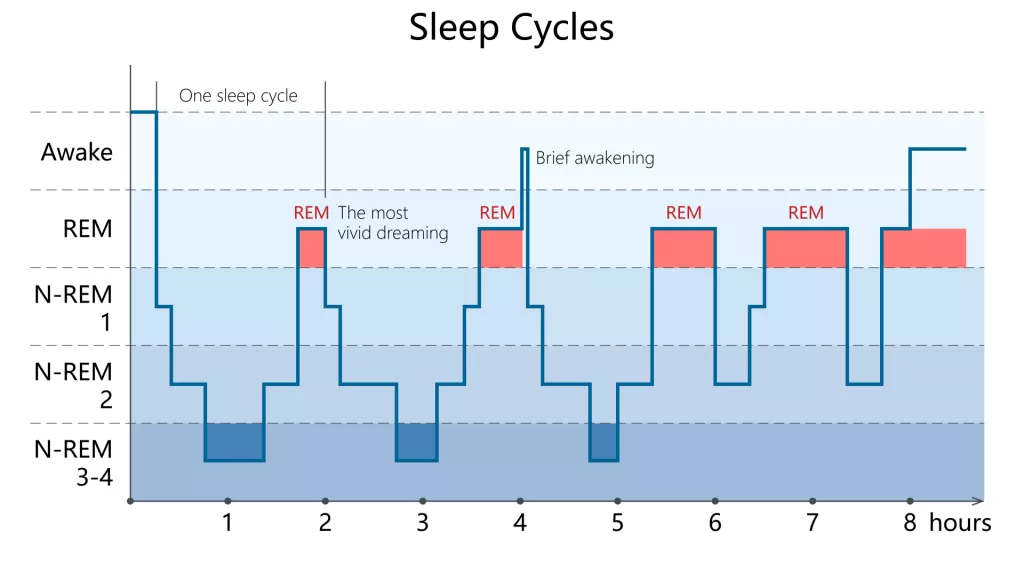
Across the night, the body cycles through different stages of sleep, including lighter stages, deep sleep, and REM sleep. Each stage plays a distinct role in physical and cognitive recovery.
During deep sleep, the body prioritizes tissue repair, immune function, and the release of key hormones involved in recovery and adaptation. Growth hormone secretion, muscle repair, and nervous system downregulation all occur during this phase.
REM sleep supports learning, memory consolidation, emotional processing, and cognitive flexibility. This stage plays a major role in mood stability, decision-making, and stress regulation.
Sleep also regulates appetite hormones, stress hormones like cortisol, blood sugar balance, and nervous system recovery. In other words, sleep acts as a central control system for many of the physiological processes your coaching relies on.
When sleep quality or duration is consistently reduced, these systems become dysregulated. Over time, that impacts energy, recovery capacity, motivation, and behavioral control. All of which show up directly in your client’s progress.
You don’t need to become a sleep technician to understand this.
But you do need to recognize that sleep underpins nearly every outcome your clients care about.
How Sleep Influences Client Recovery and Performance
For personal training and health coaching clients, sleep affects results in ways that are often subtle but significant. Yet, most coaches focus on what they can directly control: sets, reps, macros, check-ins, and accountability systems. Sleep is often overlooked as “another lifestyle advice”, while it’s one of the main factors influencing progress.
When sleep is compromised, clients may experience:
- Slower recovery between training sessions.
- Reduced performance in training.
- Mood declines. Energy shifts. Stress increases.
- Difficulty maintaining consistency.
- Emotional fatigue.
- Susceptible to illness and minor injury.
Scientific research consistently shows how sleep improves performance and daily energy:
- Basketball players who increased sleep to around 10 hours per night improved shooting accuracy by at least 9%.
- Tennis players improved their serve accuracy from 36% to nearly 42% after getting adequate sleep.
Most importantly, all these athletes stated how they feel better during the day and more confident in their training:
Looking beyond athletic populations, a client who is underslept is operating with reduced cognitive bandwidth and elevated stress load. Decision-making becomes harder. Training feels more demanding. Perceived effort rises. They are more likely to disengage, even if the training plan itself is well-designed.
- People who sleep 6 hours or less per night are about 2.5 times more likely to experience frequent mental distress.
- One night of sleep deprivation can lower quality by 50% in training or daily decision-making.
And surprisingly, insufficient sleep also makes their fat loss progress 55% slower. When sleep was restricted, only about 20% of the weight lost came from fat, meaning much of the weight loss came from lean mass instead.
Understanding the importance of sleep allows coaches to see the bigger picture. It shifts the question from: “Why aren’t they sticking to the plan?” to:
“What is limiting their capacity to execute the plan?”
In many cases, sleep is part of that answer.
Common Sleep Barriers Your Clients Face
Many coaching clients struggle with sleep for reasons that have little to do with discipline.
Common barriers include:
- High stress levels from work or family
- Inconsistent schedules
- Late-night screen exposure
- Irregular bedtime routines
- Poor sleep environments
- Excessive caffeine intake
- Overtraining or inadequate recovery
These are not clinical sleep disorders in most cases.
They are behavior patterns and environmental factors.
As a coach, you are already skilled in behavior change. Sleep fits into that broader behavioral ecosystem, even if you are not diagnosing or treating sleep conditions.
The key is recognizing when sleep may be contributing to stalled progress.
Because if it is, addressing it can unlock improvements across multiple areas simultaneously.
The Role Coaches Can Play
Personal trainers and health coaches are not expected to diagnose insomnia or treat medical sleep disorders.
But you are professionals who influence habits, routines, stress management, and lifestyle patterns.
Sleep lives within that domain.
By increasing your awareness of how sleep influences performance, recovery, and consistency, you become better equipped to:
- Identify when sleep may be a limiting factor
- Have informed conversations with clients
- Stay within your professional scope
- Support long-term behavior change
Sleep is not about becoming a sleep expert.
It is about becoming a more effective coach.
When your clients sleep better, they often recover better, train better, regulate stress more effectively, and show up with more consistency.
That creates momentum.
And momentum is what drives transformation.
Ready to Confidently Integrate Sleep Into Your Coaching?
If you’re looking to learn how to implement practical sleep coaching strategies with your clients in ways that improve performance, recovery, and long-term consistency, join Everfit Academy & Clinical Sleep Health Educator Nick Lambe, as we break down a clear, coach-ready structure for addressing sleep within your client work.

In this live session, Nick will walk through why sleep is often the hidden limiter of client progress, how it influences recovery and adherence, and how coaches can integrate sleep more intentionally into their overall approach.
If sleep is something you know matters but haven’t fully structured into your coaching conversations, this webinar will give you a practical framework to start doing so.