
The NBA Finals. The World Cup. Wimbledon. Three of the biggest stages in sport, happening at the same time, watched by billions. What the cameras show is the athlete, the shot, the goal, the match point.
But not always the coach.
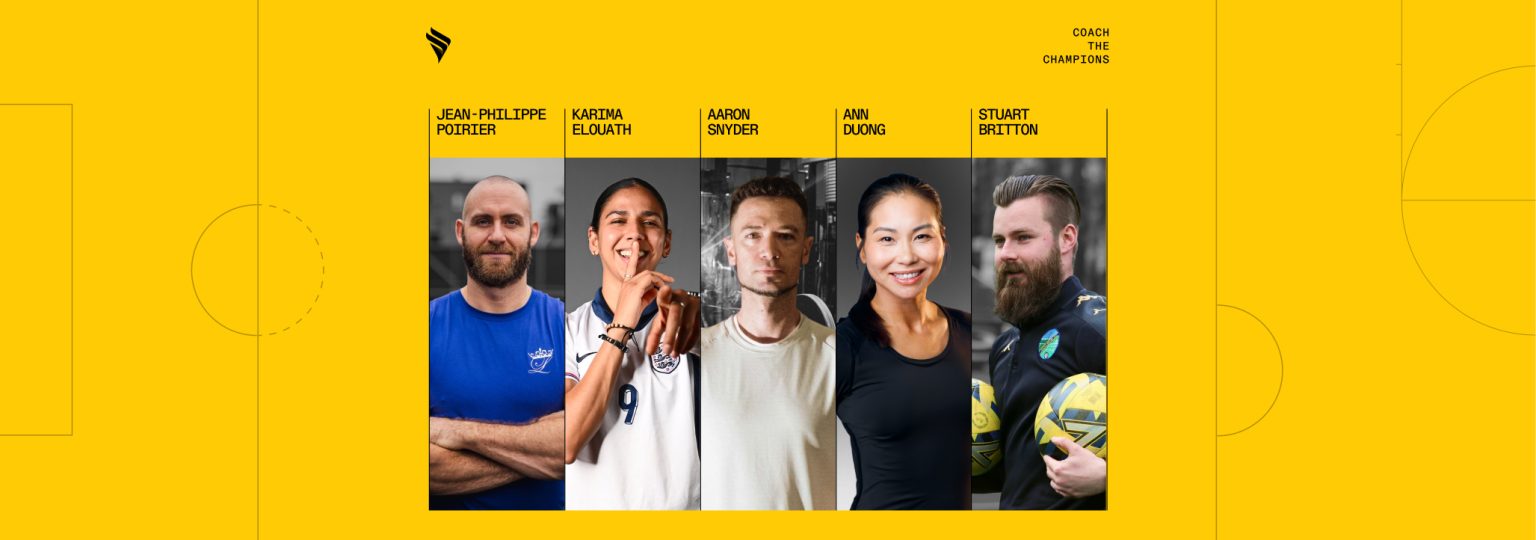
This month, we spotlighted five coaches in these three sports. Different demands, different paths in, but they share one thing: they don’t coach from a distance. They’re in the gym, on the court, in the locker room. In the wins, in the hard conversations, and everything in between.
Jump straight to the read:
- Jean-Philippe Poirier: Stop waiting for permission to be good.
- Karima Elouath: Build the mental behind the footballer.
- Ann Duong: You’re allowed to take up space.
- Aaron Snyder: Built to last.
- Stuart Britton: Learn from the best. Stay true to yourself.
Jean-Philippe Poirier: Stop waiting for permission to be good.
- Niche: Basketball Coach, Kinesiologist & Massage Therapist
- Business name: Au-delà du Ballon
- Sport: Basketball
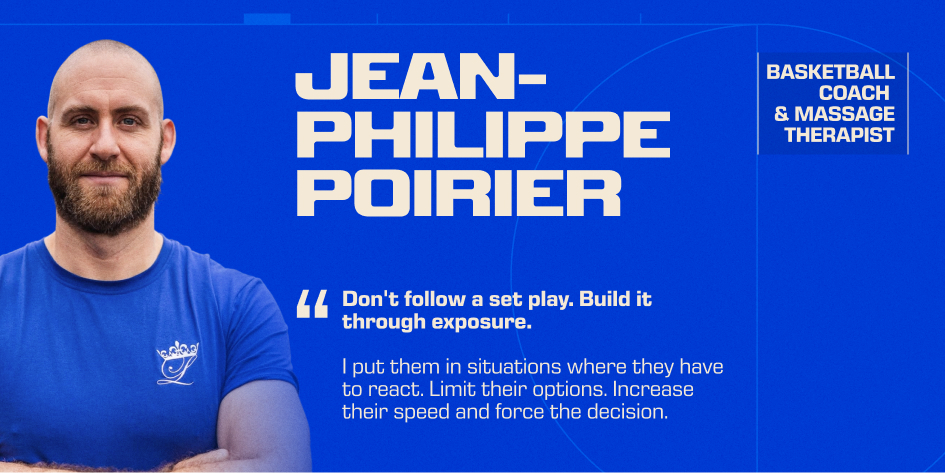
Jean-Philippe didn’t walk into coaching from the outside. He grew up inside the game, playing all the way through elementary, high school, college, and university, before naturally stepping to the other side.
This shapes everything about how he designs training. While most programs chase speed, explosiveness, and first-step quickness, Jean-Philippe builds from the opposite end.
“Everything I design off the court starts with deceleration.”
The underestimated quality, in his view, is dynamic stability: the ability to hold position and produce force for braking and cutting at odd angles. “If you can’t control your body when you’re slowing down, you’re one bad landing away from a long rehab.”
That precision carries into how he manages the full season. Off-season is for building. In-season is for protecting. Jean also manages the nervous system as much as the muscles. Sleep, stress, travel, and practice intensity all count as load.
It also carries into how he works with athletes. “I don’t believe in motivational speeches. They’re a short-term fix.“ He watches how athletes respond to adversity in the first few weeks. Their reaction to failure tells him what kind of relationship they need.
For Jean, helping each athlete find the version of themselves they actually want to become and making the daily work feel connected to that is the best way. Until one day mid-practice she made a fast, instinctive decision and looked up like she had surprised herself
That look. That’s the work.
Karima Elouath: Build the mental behind the footballer.
- Niche: Athlete Performance Coach and Football Player
- Business name: Project LVL Up
- Sport: Football
Karima didn’t plan to become a coach. She was just watching from the crowd.
Supporting a friend who was coaching a U10s team, she found herself, drawing on her midfielder instincts, naturally calling out advice from the sideline. Then one day she showed up and was handed a top. “You’re coaching.” That was it.
Football demands everything at once. Endurance, speed, explosive power, strength, and the ability to repeat it all under fatigue. When Karima designs training off the pitch, one question drives every decision: does this transfer back onto it?
That’s why her work goes three layers deep: physical, mental, emotional. Some players come to her needing strength. Some need better movement mechanics. Some need to believe in their body again.
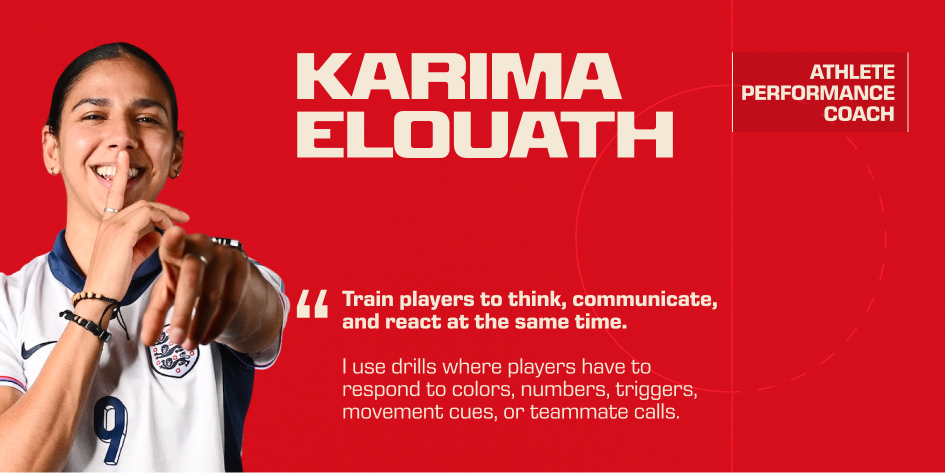
“You can have all the physical tools, but if you don’t trust yourself, it will show in your performance.”
The same philosophy shapes how she motivates. She studies her athletes: how they respond to pressure, what makes them switch on, what makes them shut down, what they want but don’t yet believe they can have.
“Once you understand the athlete, you can coach them properly.”
Her proudest moments aren’t the performance metrics. They’re the players who come out of their shell and carry themselves better all season.
Ann Duong: You’re allowed to take up space.
- Niche: RSPA-certified tennis professional.
- Business name: Coach Ann Tennis
- Sport: Tennis
After playing at the USTA National Training Center for five to six years, Ann was pulled away by a fifteen-year medical break. When she returned, there was no network waiting and no clear path in. Coaching became her way of proving she still belonged on the court.
That outsider angle never left her. And it’s exactly why she notices the kid who doesn’t quite fit the program.
Tennis can look like a sport built for a certain type of athlete: polished, well-resourced, already shaped by the system. Ann coaches the ones who fall outside that image.
Her training philosophy reflects the same precision. She designs backward from what the sport actually demands: not sustained effort, but repeated recovery.
“Points are short. Rests are short. Matches are long. I care more about a player’s ability to reset between points than about raw conditioning.”
She treats the between-point routine as a real skill. When a player loses a set and tries to think their way back into form, she brings them down into something concrete.
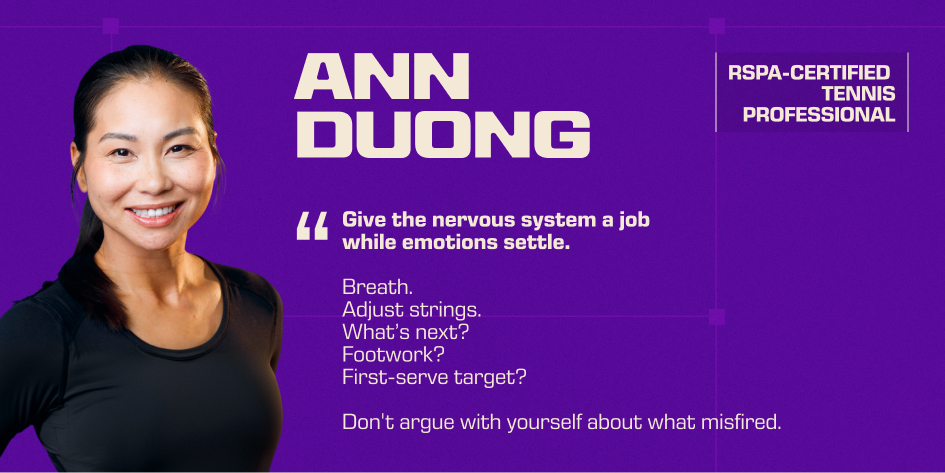
That same care extends to how she reads motivation. She watches how a player reacts to a missed shot before she decides anything. Some need the pressure turned up. Others are already running a brutal inner critic, and what they need is for her to be the calm one.
Her proudest moments come when a player realizes mid-match that they can think on their feet. That they have another chance. That they’re still in it.
Not just a better forehand. The sense that you’re allowed to show up. That the court has room for you too.
Aaron Snyder: Built to last
- Niche: DPT (Doctor of Physical Therapy), Board-Certified Orthopedic Specialist, and former Professional Basketball Player
- Business name: The Basketball PT
- Sport: Basketball
Aaron Snyder knows what it feels like when your body starts lying to you on the court.
He played professionally, and like most players pushed through aches, pain, and limitations , until one day he wasn’t jumping as high and couldn’t stop the way he used to. Nobody around him understood basketball well enough to help him figure out why.
That gap, between playing the sport and understanding what the sport does to your body, became the practice he built.
Aaron works with basketball players from competitive recreational level all the way up to athletes chasing professional contracts. His physical therapy lens changes everything. Training, to him, is building a body that holds up when the game gets long.
One of his current athletes is a former teammate who is now chasing a G-League contract with his eye on the NBA. He came to Aaron after ACL surgery with persistent post-play pain that slows him down. Aaron built a program specifically to rebuild tissue capacity and bring his surgical leg as close to symmetrical as possible.
When an athlete’s body is body is managing pain or working around something, the brain splits: part playing, part protecting. Once they remove the physical noise, the decision-making clears up on its own.
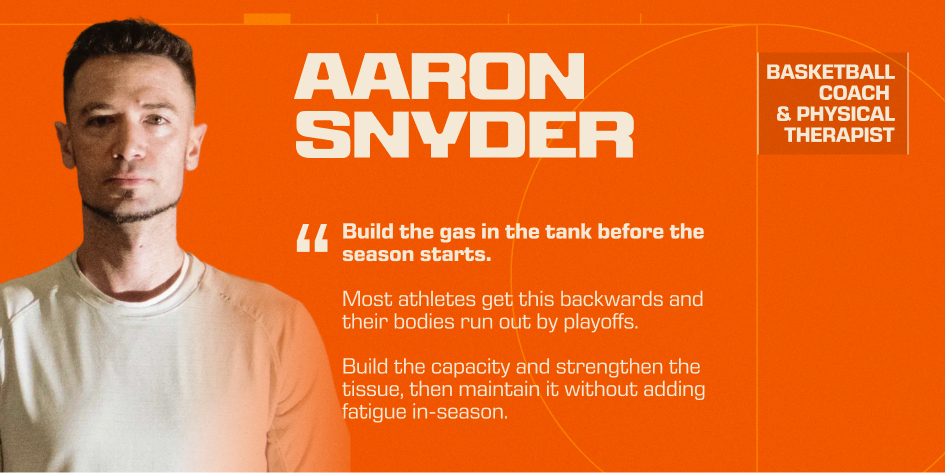
That’s what he wants to leave behind: athletes who understand their own body well enough that they don’t need him anymore. “If they come back, it’s because they’re chasing something bigger.“
Not because they’re lost in the dark.
Stuart Britton: Learn from the best. Stay true to yourself.
- Niche: NSCA Certified Strength and Conditioning Specialist, CASES Accredited Sport and Exercise Scientist, Chartered Scientist.
- Business name: Strength Coach Stu
- Sport: Football
Stuart Britton didn’t start in football. He started in Taekwondo. Fifteen years in the sport, and coaching found him early at sixteen. That foundation of discipline and movement carried him forward.
When a master’s degree led to a strength and conditioning internship with a professional football club, something clicked. It became his passion. And quickly, his team won a national league.
That season didn’t happen by accident. It came from Stuart’s approach. He tests athletes on the field, not in the gym. He identifies the gaps in their performance. Then he builds the program around what the data actually shows, not assumptions.
“I take an analytical yet empathetic approach. I find the gaps in their performance that we can address.”
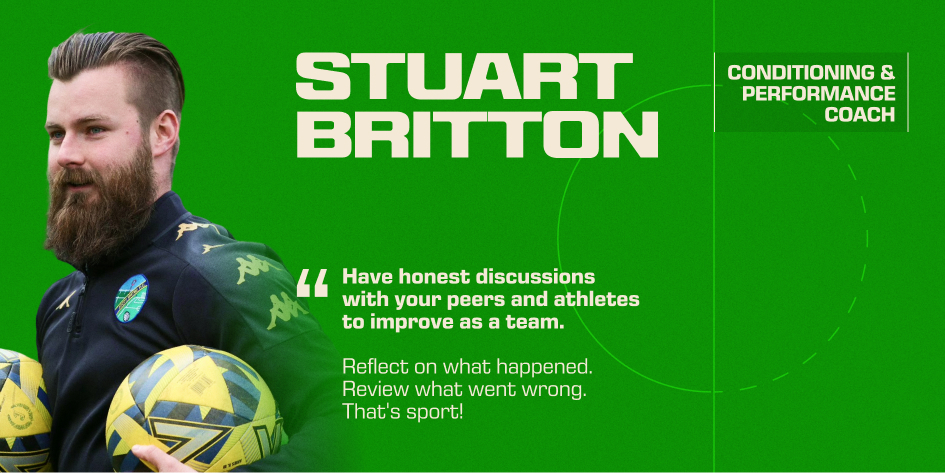
But the analysis is only half of it. Stuart brings athletes into the process. What have they tried before? What do they enjoy? What drives them? The program isn’t handed down, it’s built together. Athletes who feel ownership over their training show up differently.
When things go wrong, and they will, his response is the same. Reflect. Review. Have honest conversations. No drama, just the work, done together and done honestly.
Wrapping Up
Jean-Philippe, Karima, Ann, Aaron, and Stuart, come from different sports and different paths into coaching. But the thread running through every one of their stories is the same.
The work that wins isn’t always visible. It’s the drill nobody wants to do. It’s the hard conversations after the missed shot. It’s the athlete surprising themselves mid-practice and realizing what they’re capable of.
Great coaches don’t just build athletes. They build the spirit that carries the athlete forward.
Also read: